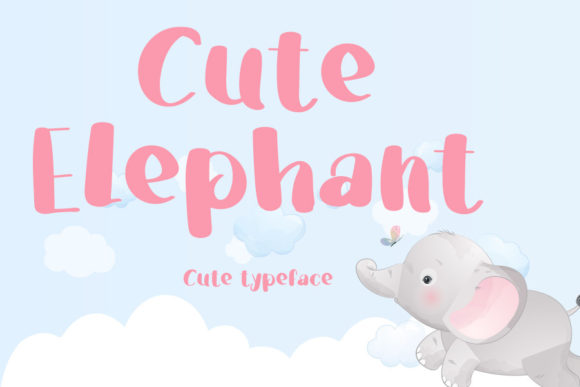
Cute Elephant: A Playful Display Font for Creative Projects
There's something about starting a new brand project that feels like opening a blank canvas. I was recently working on a boutique identity for a handmade stationery shop, and as I opened my brand board, I knew I needed a font that could capture the whimsy and charm of the brand. That’s when I stumbled upon Cute Elephant. At first glance, it looked like just another display font, but after testing it across various branding elements, I realized it had a unique personality that stood out.
A Font with Personality
Cute Elephant is exactly what it sounds like — a fun and pretty display font with playful letters that bring a sense of joy to any design. The curves and rounded edges give it a soft, approachable feel, while the slightly exaggerated shapes add a touch of whimsy. It’s not too childish, nor is it overly cutesy; it strikes a balance between playful and professional, making it perfect for creative projects that need a dash of character without losing their visual appeal.
I tested it on a logo concept for the stationery shop, and it immediately felt right. The letters were bold enough to be legible but light enough to feel inviting. The overall mood of the font is warm and friendly, which perfectly matched the brand’s vibe. It also worked well in combination with other fonts, especially when paired with a clean sans serif for body text or a classic serif for headings.
Testing Cute Elephant in Real Branding Work
As part of the project, I used Cute Elephant in several key areas:
- Logo Design: It became the main typeface for the logo, giving it a memorable and charming look.
- Packaging Mockups: When applied to product labels and packaging, it added a touch of playfulness that appealed to the target audience.
- Social Media Graphics: Used in Instagram posts and Facebook ads, it helped maintain a consistent and recognizable brand voice across platforms.
- Business Cards: The font worked well in small sizes, maintaining readability while still feeling cute and engaging.
- Website Headers: As a headline font, it drew attention without overwhelming the content below.
What stood out most was how Cute Elephant maintained its charm across different mediums. Whether it was printed on a card or displayed digitally, it always felt cohesive and intentional. However, I did notice that it might not be the best choice for long-form text or very small sizes where readability becomes an issue. For body copy or formal documents, a more traditional font would be better suited.
When to Use Cute Elephant
Cute Elephant shines as a display font, ideal for headlines, logos, brand tags, and short phrases. It works particularly well in editorial design, such as magazine covers, comic titles, and promotional flyers. Its playful nature makes it a great fit for creative industries like fashion, stationery, children’s products, and lifestyle brands.
If you're designing for a brand that wants to stand out with a bit of personality, this font can help convey that message. It’s also a good option for digital assets like website headers, social media banners, and email subject lines. Just be mindful of the context — it should be used sparingly and strategically to avoid overuse or clutter.
Font Pairing and Practical Tips
One thing I noticed during the review was how well Cute Elephant pairs with other fonts. For a balanced look, I paired it with a modern sans serif font like Helvetica Neue for body text, which created a nice contrast between the playful and clean styles. Alternatively, pairing it with a classic serif like Garamond gave the design a more elegant yet whimsical feel.
Before using Cute Elephant in final client work, I recommend testing it in different contexts. Check how it looks at various sizes, both in print and digital formats. Also, ensure that the font licensing allows for commercial use if you're incorporating it into branding materials, merchandise, websites, or print-on-demand products.
Lastly, make sure to explore the included styles and alternates if available. Some display fonts offer variations that can enhance your designs even further. If Cute Elephant includes ligatures or swashes, they can be useful in adding subtle visual interest to your typography.